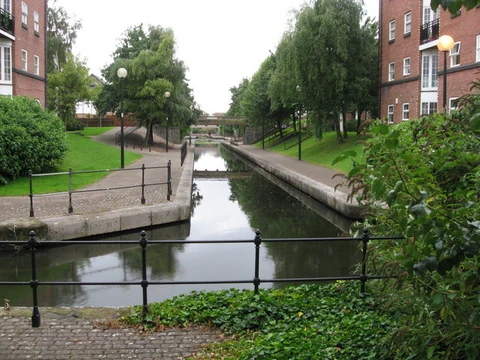
Rideau Canal
Oldest continuously operated canal system in North America.

The Rideau Canal is a 202-kilometre long canal linking the Ottawa River at Ottawa with the Cataraqui River and Lake Ontario at Kingston, Ontario, Canada. Opened in 1832 for commercial shipping, it remains the oldest continuously operated canal system in North America and is a UNESCO World Heritage Site, now used primarily for pleasure boating.
- total rise
- 83 metres (272 feet) upstream from Ottawa River to Rideau Lakes
Verified Timeline
Lore & Background
The canal was conceived after the War of 1812, when British authorities feared an American invasion along the St. Lawrence River that would cut the lifeline between Montreal and Kingston. To secure a safe military supply route, a plan was developed to proceed westward from Montreal up the Ottawa River to the mouth of the Rideau River, then southwest via a series of short canals connecting natural water bodies to Kingston. The first survey of the Rideau route was conducted in 1783 by Lieutenant Gershom French, but it was for Loyalist settlement, not a canal route. The first survey for a canal route was done in 1816 by Sir Joshua Jebb, then a 22-year-old Royal Engineer, who surveyed the main route by way of the Rideau Lakes and also a shortcut route known as the Irish Creek Route. A later survey by civilian surveyor Samuel Clowes (1823–24) discounted the Irish Creek Route, preferring the Rideau lakes route. When Lieutenant-Colonel John By was brought out of retirement in 1826 to be the Superintending Engineer, he only considered the Rideau lakes route.
Reader's Guide
Construction of the Rideau Canal was supervised by Lieutenant-Colonel John By of the Royal Engineers, with private contractors including John Redpath, Thomas McKay, Robert Drummond, Thomas Phillips, and Andrew White, and thousands of Irish, Scottish, and French-Canadian labourers. By decided to create a slackwater canal system using dams to raise the water level to sink rapids instead of constructing new channels around them. The canal work started in the fall of 1826 and was completed by the spring of 1832. The first full steamboat transit was made by Robert Drummond's steamboat, Rideau (aka 'Pumper'), leaving Kingston on May 22, 1832, with Colonel By and family on board, and arriving in Bytown on May 29, 1832. The final cost was £822,804 when all costs including land acquisition were accounted for (January 1834). Because of the unexpected cost overruns, John By was recalled to London and was retired; he received no accolades or recognition. Although never used for military defence, the canal became a busy commercial artery for shipping heavy goods and transporting immigrants, until railways and the St. Lawrence Seaway diverted traffic. Today it serves pleasure boating and is part of the Great Loop waterway route.
Did You Know?
- The Rideau Canal's 46 locks raise boats 83 metres (272 feet) upstream from the Ottawa River to the Rideau Lakes, then drop them 50 metres (164 feet) downstream to Kingston.
- The first full steamboat transit of the canal was made by Robert Drummond's steamboat, Rideau (aka 'Pumper'), carrying Colonel John By and his family from Kingston to Bytown between May 22 and May 29, 1832.
- The canal's final construction cost was £822,804 (January 1834), and the cost overruns led to Colonel By being recalled to London and retired without recognition.
- As many as one thousand workers died during construction, mostly from malaria and other diseases; the first memorial acknowledging labourer deaths was erected in 1993 at Kingston Mills.
- The name 'Rideau' is French for 'curtain', derived from the curtain-like appearance of Rideau Falls where they join the Ottawa River.
A Military Lifeline Born of Fear
After the War of 1812, information was received about the United States' plans to invade the British colony of Upper Canada from upstate New York by following the St. Lawrence River. This would have severed the lifeline between Montreal and a major naval base at Kingston. To protect against such an attack, the British began the construction or reinforcement of defences including Fort Henry in Kingston. To ensure safe passage for military vessels between Montreal and Kingston, a route was planned that would proceed westward from Montreal, up the Ottawa River to the mouth of the Rideau River, later the site of Bytown (now Ottawa), then southwest via a series of short canals connecting natural water bodies to Kingston. The Rideau Route was first surveyed in 1783 by Lt. Gershom French, not as a canal route but as potential area for Loyalist settlement. The first survey for a canal route was done in 1816 by Sir Joshua Jebb, then a 22-year-old Royal Engineer. In 1819, Charles Lennox, 4th Duke of Richmond, planned to inspect the route but died after being bitten by a fox. On 1 March 1819, the Duke of Wellington wrote a memorandum advocating that the Rideau Canal should be built as part of the defence system for Canada.
Engineering a Waterway Through the Land
Lieutenant-Colonel John By, recalled from retirement in 1826 as Superintending Engineer, made a defining engineering choice: rather than dig new channels around rapids, he raised water levels with dams to submerge them, creating a slackwater system. This approach demanded fewer workers, cut costs, and simplified construction. Work began in the autumn of 1826 and was finished by spring 1832. The finished canal stretched 202 kilometres, threading 46 locks that lifted vessels 83 metres up the Rideau River to the Rideau Lakes, then dropped them 50 metres down the Cataraqui River to Kingston. Thousands of Irish, Scottish, and French-Canadian labourers performed the bulk of the physical work, while private contractors including John Redpath, Thomas McKay, and Robert Drummond managed various sections. The total cost, including land acquisition, reached £822,804 by January 1834. The overruns proved politically fatal for By: he was recalled to London, retired without ceremony, and received no public recognition for what had become one of the great engineering feats of the era.
Commerce, Immigration, and a Changing Artery
The Rideau Canal opened for commercial shipping in 1832, and its first full steamboat transit was made by Robert Drummond's vessel, the Rideau, nicknamed Pumper, which carried Colonel By and his family from Kingston to Bytown between May 22 and 29 of that year. Because the St. Lawrence River between Montreal and Kingston was plagued by dangerous rapids, the canal quickly became the preferred commercial artery linking Montreal to the Great Lakes. Tens of thousands of immigrants used the waterway to reach Upper Canada, and the canal stimulated trade, settlement, and economic growth across the region. No further military engagements between Canada and the United States ever materialized, so the canal's original defensive purpose went untested. Over time, freight traffic migrated to railways and, later, the St. Lawrence Seaway, gradually reducing the canal's commercial role. Yet the waterway never fell silent; it simply changed character, transitioning from a bustling freight corridor to a more leisurely passage.
A Living Heritage on the Water
Today the Rideau Canal holds two distinctions that set it apart in the North American landscape: it is the oldest continuously operated canal system on the continent, and it carries UNESCO World Heritage Site status. From May through October each year, Parks Canada operates the waterway for pleasure boating, allowing recreational craft to make the same 202-kilometre journey that military and commercial vessels once undertook. The canal's name traces back to the Rideau River, which took its name from Rideau Falls. The French word rideau means curtain, a reference to the curtain-like appearance of the falls where they meet the Ottawa River. That same falls, first noted in 1783, marked the starting point of what would become the canal's Ottawa end. The waterway thus carries within its very name a small piece of the landscape that inspired it, while its locks and lakes continue to raise and lower boats through the same 83-metre climb and 50-metre descent that Colonel By's engineers designed nearly two centuries ago.
Frequently Asked Questions
What is the Rideau Canal?
It is a 202-kilometre waterway in Ontario, Canada, linking the Ottawa River at Ottawa to the Cataraqui River and Lake Ontario at Kingston. Opened in 1832 for commercial shipping, it holds the record as North America's oldest canal system still in continuous operation.
How much elevation does the Rideau Canal climb?
From the Ottawa River up to the Rideau Lakes, the canal rises a total of 84 metres (roughly 275 feet). That entire gain is managed through a series of locks along the route.
Why is the Rideau Canal a UNESCO World Heritage Site?
UNESCO recognized it because it is the oldest continuously operated canal system on the North American continent, having run without interruption since 1832. Its intact 19th-century infrastructure and engineering heritage made it a standout example of early industrial waterway design.
What is the Rideau Canal used for today?
Although it was built to move commercial cargo, its main modern purpose is recreational and pleasure boating. It remains a fully navigable, year-round waterway open to the public.
Where exactly does the Rideau Canal start and end?
The canal begins at the Ottawa River in the city of Ottawa and runs northwest to the Cataraqui River at Kingston, Ontario, where it meets Lake Ontario. The full route spans 202 kilometres across eastern Ontario.
More in Canals And Waterways 25-36
Elsewhere in the Canals And Waterways universe
Spotted an error? Know more?
This is a living reference — every entry is fact-audited, and reader corrections feed straight into our audit queue. Suggest an edit · See this site's audit record