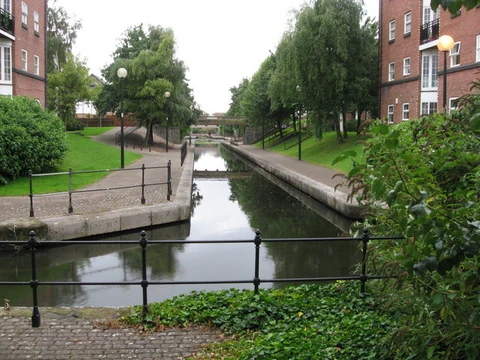
Lingqu

The Lingqu is a canal in Xing'an County, near Guilin, in the northwestern corner of Guangxi, China. It connects the Xiang River with the Li River, forming part of a historical waterway between the Yangtze and the Pearl River Delta. It was the first canal in the world to connect two river valleys and is one of the most well-preserved such projects globally.
- location
- Xing'an County, near Guilin, Guangxi, China
- length
- 36.4 kilometers (22.6 miles)
- ordered by
- Qin Shi Huang, First Emperor of the Qin dynasty
- designed by
- Shi Lu
- known for
- First canal to connect two river valleys; oldest contour canal in the world
Lore & Background
The architect who designed the canal was Shi Lu. It is the oldest contour canal in the world, receiving its water from the Xiang River. The canal also aided water conservation by diverting up to a third of the flow of the Xiang to the Li.
Reader's Guide
As one of the most well-preserved such projects, it provides insight into ancient Chinese water management. The canal has been placed on the UNESCO World Heritage Sites tentative list, underscoring its global cultural value. Its role in connecting the Yangtze and Pearl River systems highlights its strategic and economic importance over centuries.
Did You Know?
- The Lingqu was the first canal in the world to connect two river valleys.
- The canal is 36.4 kilometers (22.6 miles) long.
Geographic Mastery: Bridging Two Great River Systems
The Lingqu canal, stretching 36.4 kilometers through the hilly terrain of Xing'an County near Guilin in northwestern Guangxi, represents a remarkable feat of geographic engineering. Its defining achievement lies in linking two major river systems that flow in opposite directions: the Xiang River, which carries water northward into the vast Yangtze basin, and the Li River, which drains southward through the Gui River and the Xijiang into the Pearl River Delta. This made it the first canal in recorded history to connect two separate river valleys, a distinction that underscores just how ambitious the project was for its era. The waterway did not merely serve local traffic; it formed a critical segment of a much larger trans-regional shipping corridor that bound the agricultural heartlands of the north to the commercial ports of the south, reshaping how goods and people moved across the Chinese landscape for centuries.
Imperial Ambition: The Qin Conquest and Shi Lu's Vision
His goal was military: a reliable supply line was needed to project Qin power southward against the Baiyue tribes, whose mountainous homeland lay beyond the natural barriers of the region. The emperor entrusted the design of this canal to the architect Shi Lu, who conceived a solution that would become the oldest contour canal in the world. Rather than simply digging a straight trench, Shi Lu's design drew its water supply from the Xiang River and carefully graded the channel to follow the natural contours of the landscape. This approach allowed the canal to function as a controlled waterway rather than a simple ditch, setting a precedent for hydraulic engineering that would echo through subsequent Chinese canal projects. The canal's construction in the late third century BC placed it among the earliest large-scale state-directed infrastructure projects in recorded history, a testament to the organizational capacity of the newly unified Qin state.
A Living Engineering: Locks, Diversion, and Centuries of Adaptation
The Lingqu was never a static structure; it evolved over many centuries as engineers refined its hydraulic systems. A clear written description of pound locks—more sophisticated chambers that trapped water between two sets of gates—appears in twelfth-century records, though scholars believe these were likely installed one or two centuries earlier. Beyond navigation, the canal served a crucial water-management function: it diverted up to one-third of the Xiang River's flow into the Li River, a design feature that aided water conservation and ensured the southern waterway maintained sufficient depth for traffic. This dual role as both a navigation channel and a water-distribution system made the Lingqu far more than a simple cut through a ridge. Each generation of engineers who maintained and upgraded the locks and channels left their mark, turning a Qin-era military project into a continuously adapted hydraulic network that served the region for over a millennium.
Enduring Legacy: Preservation and Global Recognition
Few ancient waterways survive in anything close to their original working condition, yet the Lingqu stands out as one of the most well-preserved canal projects in the world. Its 36.4-kilometer alignment, the remnants of its lock systems, and the overall channel structure have endured for more than two thousand years, a remarkable testament to the quality of the original construction and the care of successive communities who depended on it. This exceptional state of preservation has drawn international attention: the canal has been placed on the UNESCO World Heritage Sites tentative list, signaling that the global heritage community regards it as a candidate for the highest level of protection and recognition. Its significance is further contextualized by its place among other landmark Chinese hydraulic works, including the Grand Canal of China, the Dujiangyan irrigation system, and the Zhengguo Canal, all of which represent different facets of the country's long tradition of water management. For scholars of engineering history, the Lingqu remains a tangible, walkable link to the ancient world's earliest experiments in connecting disparate river basins.
Frequently Asked Questions
What is the Lingqu Canal?
The Lingqu is a 36.4-kilometer (22.6-mile) waterway in Xing'an County, near Guilin, in Guangxi, China. It links the Xiang River to the Li River and sits within a much older trade route connecting the Yangtze basin to the Pearl River Delta.
Why is the Lingqu Canal considered a world first?
It is recognized as the earliest known canal to join two separate river valleys, making it a landmark in hydraulic engineering. It is also regarded as the oldest surviving contour canal on record.
Where exactly is the Lingqu Canal located?
It runs through Xing'an County, which sits in the northwestern corner of Guangxi province, not far from the city of Guilin.
What makes the Lingqu Canal still notable today?
Beyond its age, it stands out as one of the best-preserved ancient canal projects anywhere in the world. Its original contour-route design—following the natural hillside rather than boring straight through—remains a textbook example of pre-modern engineering.
More in Canals And Waterways 25-36
Elsewhere in the Canals And Waterways universe
Spotted an error? Know more?
This is a living reference — every entry is fact-audited, and reader corrections feed straight into our audit queue. Suggest an edit · See this site's audit record