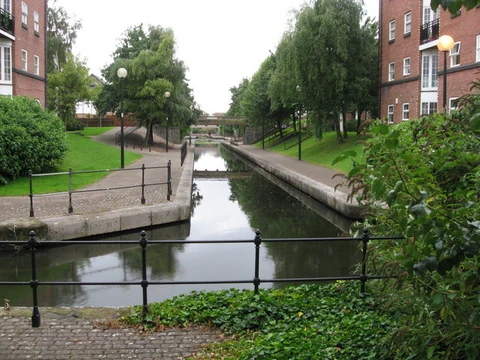
Kiel Canal
Artificial waterway linking the North and Baltic Seas.

via Wikipedia: Kiel Canal · see source
The Kiel Canal (German: Nord-Ostsee-Kanal, formerly Kaiser-Wilhelm-Kanal) is a 98-kilometer-long freshwater canal linking the North Sea to the Baltic Sea. It runs through the German state of Schleswig-Holstein, from Brunsbüttel at the mouth of the Elbe to Holtenau on the Kiel Fjord. Constructed between 1887 and 1895 and widened between 1907 and 1914, it is one of the world's most frequented artificial waterways, reducing the journey between the two seas by 460 km by allowing ships to bypass the Jutland peninsula and the Danish Straits.
- length
- 98 km (61 mi)
- constructed
- 1887–1895
- widened
- 1907–1914
- annual traffic
- 32,000 ships (90 daily)
- annual cargo
- approximately 100 million tonnes
- max ship length
- 235.50 m (772.6 ft)
- max ship beam
- 32.50 m (106.6 ft)
Verified Timeline
Lore & Background
The first connection between the North and Baltic Seas was the Eider Canal, completed in 1784 under Danish-Norwegian rule during the reign of Christian VII. It was only 29 m wide and 3 m deep, limiting vessels to 300 tonnes. After the Second Schleswig War of 1864, Schleswig-Holstein came under Prussian control (from 1871 the German Empire), and a new canal was sought by merchants and the German navy to link their bases without sailing around Denmark. Construction of the Kiel Canal began in June 1887 at Holtenau, employing over 9,000 workers over eight years. The first vessel to transit was the aviso SMS Jagd in late April 1895, followed by the tender Otter in May. On 20 June 1895, Kaiser Wilhelm II officially opened the canal for transit from Brunsbüttel to Holtenau. The next day, at a ceremony in Holtenau, he named it the Kaiser Wilhelm Kanal after his grandfather, Kaiser Wilhelm I, and laid the final stone. British director Birt Acres filmed the opening; surviving footage is preserved at the Science Museum in London. To cope with increasing traffic and the demands of the Imperial German Navy, the canal was widened between 1907 and 1914 to allow dreadnought battleships to pass, with larger locks installed at Brunsbüttel and Holtenau. After World War I, the Treaty of Versailles required the canal to be open to vessels of commerce and war of any nation at peace with Germany, though the United States opposed this to avoid a precedent for the Panama Canal. The government under Adolf Hitler repudiated its international status in 1936, but the canal was reopened after World War II. In 1948, the current name was adopted. The canal was partially closed in March 2013 after two lock gates failed at Brunsbüttel, blamed on neglect and a funding dispute between the German Federal Government and Schleswig-Holstein. Germany's Federal Transport Ministry promised rapid repairs.
Reader's Guide
The Kiel Canal remains a vital artery for European maritime trade, significantly shortening the route between the North and Baltic Seas. Its operation is governed by detailed traffic rules, with ships categorized into six groups based on dimensions; larger vessels must accept pilots and specialized canal helmsmen, and in some cases a tugboat. All permanent bridges crossing the canal have a clearance of 42 m, and the canal imposes maximum dimensions for ships: length 235.50 m, beam 32.50 m, and draught up to 7.00 m (or 9.50 m for ships up to 160.00 m). The canal is crossed by eleven fixed links, including the Levensau High Bridge (completed 1894), and served by 14 ferry lines, notably the hanging ferry under the Rendsburg High Bridge, which was replaced after a 2016 collision and returned to service in 2022. The western part of the canal was widened and deepened from 1965 to 2001, and widening of the eastern part began in 2020, with the first 4.3-kilometer section between Königsförde and Groß-Nordsee opened on 10 November 2025, widening the stream bed from 44 to 70 meters. Five additional sections are to be expanded.
Did You Know?
- The first vessel to transit the canal was the aviso SMS Jagd, sent through in late April 1895 before the official opening.
- British director Birt Acres filmed the canal's opening in 1895; surviving footage is preserved at the Science Museum in London.
- The canal reduces the journey between the North and Baltic Seas by 460 km (290 mi).
- In March 2013, two lock gate failures near Brunsbüttel forced a partial closure, causing ships over 125 m to take a 450 km detour via Skagerrak.
Construction and the Imperial Inauguration
The Kiel Canal was born out of a shifting political landscape. After the Second Schleswig War of 1864 placed Schleswig-Holstein under Prussian rule, and later into the German Empire from 1871, both merchants and the Imperial Navy pressed for a direct waterway that would let ships move between Baltic and North Sea bases without the long sail around Denmark. Ground was broken at the Holtenau end in June 1887, and over the following eight years a workforce of more than 9,000 men carved the 98-kilometre channel. Before the formal opening, the aviso SMS Jagd was sent through in late April 1895 to test the waterway's readiness, and the tender Otter followed in May. On 20 June 1895, Kaiser Wilhelm II personally inaugurated the canal for transit from Brunsbüttel to Holtenau. The next day, at a ceremony in Holtenau, he named the waterway the Kaiser-Wilhelm-Kanal after his grandfather and set the final stone. British filmmaker Birt Acres recorded the event, and surviving footage of that early motion picture is held in London's Science Museum.
Naval Ambition and Diplomatic Friction
From the outset the canal served a dual commercial and military purpose, but its strategic dimension grew markedly during the 1907–1914 enlargement. The channel was broadened specifically so that dreadnought-class battleships could shuttle between the Baltic and the North Sea without rounding the Jutland peninsula, and two larger locks were installed at both the Brunsbüttel and Holtenau ends to admit these capital ships. The canal's international standing became a diplomatic flashpoint after World War I. The Treaty of Versailles required the waterway to stay open to commercial and war vessels of any nation at peace with Germany, while German administration continued. The United States objected, worried the clause would set a precedent that could be turned against American interests at the Panama Canal. In 1936 the government under Adolf Hitler unilaterally repudiated the canal's international character, though full freedom of passage for all traffic was restored after the Second World War ended.
Managing a High-Traffic Waterway
The canal now carries roughly 32,000 vessels each year—about 90 per day—moving close to 100 million tonnes of goods and shaving 460 kilometres off the North-to-Baltic route by letting ships bypass the Danish Straits. To keep that volume safe, every vessel is sorted into one of six traffic groups according to its dimensions. Larger ships must accept a pilot and a dedicated canal helmsman, and in some cases a tugboat as well. Passing rules are strict: bigger vessels may be ordered to fasten to bollards spaced along the channel so oncoming traffic can clear. Pleasure craft follow a separate regulatory regime. Physical limits are precise—maximum overall length 235.5 metres, beam 32.5 metres, draught 7 metres; ships up to 160 metres long may carry a draught of 9.5 metres. Every fixed bridge spanning the canal maintains a 42-metre clearance.
From the Eider Canal to Ongoing Expansion
The modern canal grew out of an earlier, modest waterway. The Eider Canal, finished in 1784 under Danish-Norwegian rule in the reign of Christian VII, was only 29 metres wide and 3 metres deep, part of a 175-kilometre route from Kiel to Tönning that could accommodate vessels of roughly 300 tonnes. The present 98-kilometre freshwater link runs from Brunsbüttel at the Elbe's mouth to Holtenau on the Kiel Fjord, and at Oldenbüttel it ties into the navigable River Eider via the short Gieselau Canal. The canal has kept evolving: the western stretch was widened and deepened in projects spanning 1965 to 2001. A new eastern-phase expansion began in 2020, and its first 4.3-kilometre segment between Königsförde and Groß-Nordsee opened on 10 November 2025, widening the stream bed from 44 to 70 metres. Five more sections are queued for the same work. In March 2013, two failed lock gates near Brunsbüttel forced a partial closure, pushing ships over 125 metres onto a 450-kilometre Skagerrak detour and exposing a funding dispute between the federal government and Schleswig-Holstein.
Frequently Asked Questions
What is the Kiel Canal?
The Kiel Canal (Nord-Ostsee-Kanal) is a 98-kilometer freshwater route in Schleswig-Holstein, Germany, connecting the North Sea to the Baltic Sea. It stretches from Brunsbüttel at the Elbe estuary to Holtenau on the Kiel Fjord.
How long is the Kiel Canal?
The waterway measures 98 kilometers, roughly 61 miles, and accommodates vessels up to 235.50 meters in length.
What role does the Kiel Canal play in maritime shipping?
It allows ships to bypass the Jutland peninsula and the Danish Straits, shaving about 460 kilometers off the North-to-Baltic route. This shortcut makes it one of the busiest artificial waterways in the world.
How much traffic does the Kiel Canal handle?
Approximately 32,000 vessels transit the canal each year—about 90 per day—carrying close to 100 million tonnes of cargo.
When was the Kiel Canal constructed and widened?
The original build ran from 1887 to 1895, followed by a widening project between 1907 and 1914. It was first known as the Kaiser-Wilhelm-Kanal before taking its current name.
More in Canals And Waterways 1-24
Elsewhere in the Canals And Waterways universe
Spotted an error? Know more?
This is a living reference — every entry is fact-audited, and reader corrections feed straight into our audit queue. Suggest an edit · See this site's audit record